

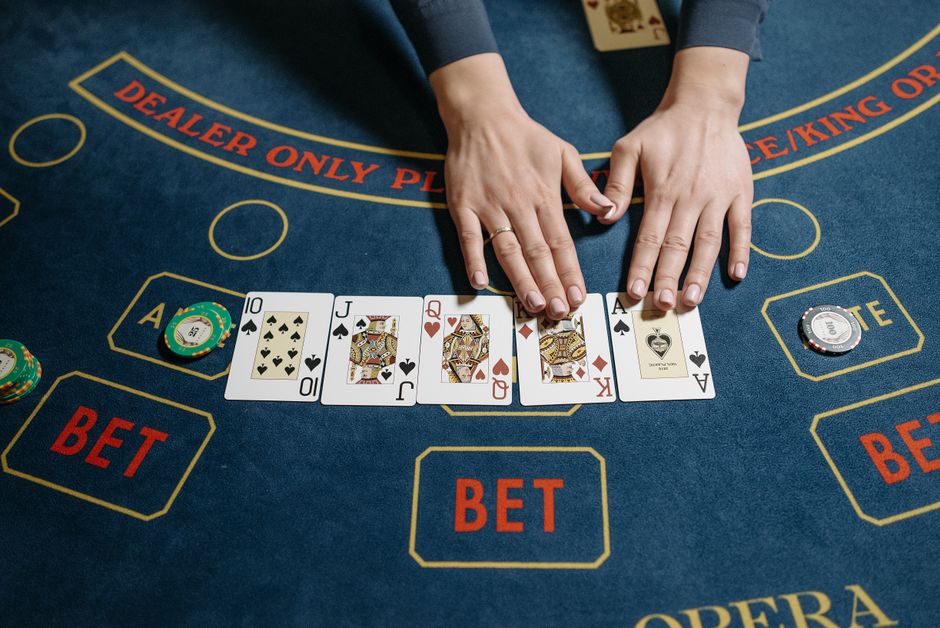
There is a moment every gambler knows: the spin slows, the river card hovers, and the whole world compresses into a single outcome. That moment is not luck. It is a product of mathematics, psychology, and an industry that has perfected both. iGaming is worth well over $100 billion globally now, and it did not get there by accident. It got there by understanding exactly how humans respond to uncertainty — and by charging a small, invisible fee on every single one of those compressed moments.
The House Edge Is Not a Scam — It Is a Business Model
Walk into any casino, online or off, and you are playing against a number, not a person. That number has a name: the house edge. Take American roulette. Thirty-eight pockets, 18 red, 18 black, two green. A bet on red pays even money, but your true odds of winning are 18 in 38, or 47.4%. That gap — 5.26% — is the casino's cut. It does not mean you lose 5.26% on every spin. It means that over a million spins, the casino keeps roughly 5.26% of everything wagered, and no amount of betting strategy changes that.
European roulette, with one green zero instead of two, drops the edge to 2.7%. Same game, same thrill, half the fee. This is the single most useful fact any casual player can internalize. The game you choose matters more than the strategy you bring to it.
Slots: The Most Misunderstood Game in the Building
Slot machines are not random in the way most people think. They are random in a very specific, engineered way, governed by a Random Number Generator that produces a result the instant you hit spin. Modern slots are also volatility machines, and volatility is a concept casino marketers rarely explain clearly.
Low-volatility slots, like many classic three-reel games, pay small amounts frequently. High-volatility slots, like the megaways titles that dominate streaming channels, pay rarely and enormously. The RTP — return to player — can be identical between two games at 96%, yet the experience is completely different. One feels like a slow leak; the other feels like a desert with a distant oasis. You can read more about this at FAFA828.
- RTP tells you the long-run return. 96% means $96 back per $100 wagered over millions of spins.
- Volatility tells you the shape of the ride. It is not about fairness; it is about variance.
- Max win caps are contractual limits. A slot with a 5,000x cap will never, ever pay more, no matter how the reels land.
Here is a practical tip most players never use: check the RTP before you play. Reputable operators publish it, and the difference between a 94% slot and a 97% slot is enormous over a session. That is not a gimmick — it is the entire arithmetic of whether you go home up, down, or flat.
Poker Is the One Game Where You Can Actually Win Long Term
This is not a motivational slogan. It is a structural fact. In poker, you are not playing against the house. The house takes a rake — typically 5% of the pot, capped at a few dollars — and then steps out of the way. That means a skilled player is genuinely playing a positive-expectation game against weaker opponents. No other casino product offers that.
The catch is brutal: the rake means you have to be better than the average player at your table by a margin wide enough to overcome it. At a 5% rake, that margin is thin. At low-stakes tables full of recreational players, it is achievable. At high-stakes tables full of regulars, it is nearly impossible — the rake eats everyone, and only the very best survive.
If you are serious about poker, the single highest-leverage habit is not studying solvers. It is table selection. Sitting in a game with two or three weak players is worth more than any advanced line you will ever memorize. Good players hunt bad games. Great players refuse to sit in good ones.
Sports Betting: Where the Edge Lives Up Front
Sports betting has exploded in the United States since the 2018 Supreme Court decision struck down the federal ban, and it is now the fastest-growing vertical in iGaming. But the economics are subtle. A bookmaker prices a market so that both sides of a bet, taken together, return less than 100%. That overround — usually 4% to 8% on a two-way market — is the book's edge.
To beat it, you need information the market has not fully priced. That is harder than it sounds. Closing lines are remarkably efficient, which means the sharpest bettors are not betting on games; they are betting on line movement. They find soft numbers early, before the market corrects, and they exploit promotions and bonuses that give them a genuine mathematical overlay.
- Shop for the best line across multiple books before locking in any bet.
- Track closing lines to grade your own process, not just your results.
- Treat bonuses as the real edge — a matched deposit is often worth more than any opinion you have about a game.
The Practical Playbook
If you take nothing else from this, take the ranking. If you want the best long-term expected value, poker and sports betting offer genuine opportunity for skilled players. Slots and table games are entertainment purchases, and the honest way to enjoy them is to budget like you would for a concert: choose an amount you are happy to spend, and never chase it.
And wherever you play, apply one rule that separates thoughtful players from the rest: know the house edge and the RTP before you wager, not after. The information is public, usually one click away, and almost nobody looks at it.
The iGaming industry has spent decades optimizing the moment the reels stop. The players who thrive online are the ones who optimize the moment before they press the button.


Coding is used in almost all aspects of life and work now, be it directly or indirectly. It’s not just for companies in the tech sector. “An increasing number of businesses rely on computer code,
Coding is used in almost all aspects of life and work now, be it directly or indirectly. It’s not just for companies in the tech sector. “An increasing number of businesses rely on computer code,
Coding is used in almost all aspects of life and work now, be it directly or indirectly. It’s not just for companies in the tech sector. “An increasing number of businesses rely on computer code,