

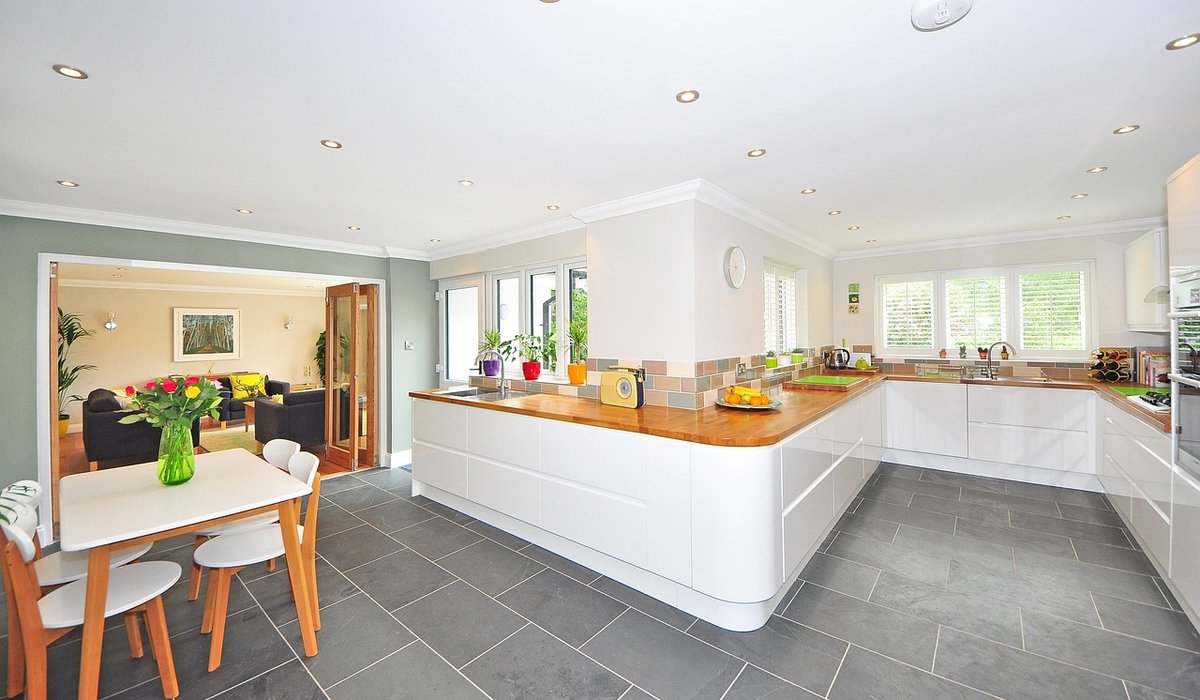
Why Coastal Floors Face a Harder Life
Living by the sea is a joy, but your floors take a beating that inland homes simply don't face. Wind-borne sand acts like sandpaper underfoot, salt crystals draw moisture out of the air and settle into every crevice, and humidity levels swing from damp winter mornings to sun-baked afternoons. Add wet dogs, sandy wellies and the occasional spatter of sea spray through an open window, and it's clear that a floor chosen purely for looks won't last long.
The good news is that coastal properties don't require compromise. Porcelain tiles, engineered wood and luxury vinyl all handle seaside conditions beautifully — they simply do it in different ways. Here's how to choose between them.
Porcelain Tiles: The Hardiest Choice
If your priority is a floor that shrugs off sand, salt and standing water, porcelain is hard to beat. It's dense, non-porous and effectively waterproof, which makes it ideal for hallways, boot rooms, kitchens and ground-floor living areas in seafront cottages.
Look for full-body or glazed porcelain with a water absorption rate below 0.5%, and check the slip rating — R10 or R11 for indoor floors near doors, and R11 or higher for conservatories and covered terraces. A matt or textured finish hides sandy footprints far better than polished tiles, which show every mark.
- Grout matters as much as the tile. Standard cement grout stains and crumbles in salty air; epoxy grout is harder, more stain-resistant and easier to scrub.
- Go for a slightly larger format — 600 x 600mm or 600 x 900mm means fewer grout lines to trap grit.
- Floors can feel cold, so consider electric underfloor heating. It also helps dry out damp patches quickly.
The trade-off is acoustic: tiles echo in open-plan spaces, so pair them with rugs, soft furnishings and curtains to soften the sound.
Engineered Wood: Warmth Without the Warping
Solid timber and coastal homes rarely get along. Constant humidity changes cause boards to cup, gap and bow. Engineered wood, however, is built with a cross-ply core topped by a real wood veneer, which makes it far more dimensionally stable.
Choose a board with a wear layer of at least 4mm so it can be sanded back once or twice, and look for a plywood or high-quality multi-layer core rather than a soft fibreboard one. Oak is a sensible species: hard-wearing, widely available and forgiving of minor scratches.
- Allow the boards to acclimatise in the room for at least 48 hours before fitting.
- Leave a proper expansion gap around the perimeter and cover it with skirting rather than filling tight to the wall.
- Protect the entrance with a decent-size mat and a shoe-off habit — grit is what dulls a finish fastest.
- Re-oil or re-lacquer every few years, especially in hallways and rooms with direct door access to the beach.
Engineered wood is the best pick if you want the character of real timber in a bedroom, dining room or snug. Keep it out of bathrooms and utility rooms.
Luxury Vinyl: Practical, Forgiving, Affordable
Luxury vinyl tile (LVT) has improved enormously and now rivals wood and stone for realism. It's fully waterproof, warm underfoot and comfortable to stand on, which makes it a superb choice for kitchens, bathrooms, boot rooms and holiday lets.
Check the wear layer thickness: 0.3mm is fine for bedrooms, 0.5mm for general living areas, and 0.7mm or more for hallways and heavy-traffic rental properties. A rigid-core (often called SPC) option clicks together and copes better with temperature changes than thinner glue-down sheets.
- Glue-down installation resists lifting in humid rooms better than a floating floor.
- Textured embossing gives grip and hides sandy smudges.
- Avoid very dark, high-gloss finishes — they show every grain of sand and droplet of water.
What to Avoid, and Where
Some materials simply don't belong by the coast. Solid hardwood, laminate with a chipboard core, and unsealed porous stone will all struggle. If you love natural stone, choose a honed, sealed variety such as slate or granite and reseal it annually — but expect more maintenance than porcelain.
Be realistic about zoning. A sensible coastal home often mixes materials: porcelain in the hall and boot room, LVT in the kitchen and bathroom, engineered wood in the sitting room and bedrooms. Threshold strips and a change in level make transitions neat and stop grit travelling through the house.
Small Details That Make a Big Difference
Whatever you choose, the fitting matters as much as the product. Coastal homes often have uneven old floors, so take time to level and prepare the subfloor properly. Leave a generous entrance mat zone of at least 1.5 metres where possible, and fit door thresholds that sit slightly proud to catch blown sand.
Keep a simple maintenance routine: sweep or vacuum grit daily rather than letting it grind in, mop tiles with warm water and a pH-neutral cleaner, and wipe spills on wood promptly. In winter, when heating dries the air indoors, a humidifier in rooms with engineered wood helps prevent seasonal gapping.
Chosen well, a coastal floor can look beautiful for twenty years and more. Match the material to the room, respect the moisture, and your home will handle everything the British seaside throws at it.


Coding is used in almost all aspects of life and work now, be it directly or indirectly. It’s not just for companies in the tech sector. “An increasing number of businesses rely on computer code,
Coding is used in almost all aspects of life and work now, be it directly or indirectly. It’s not just for companies in the tech sector. “An increasing number of businesses rely on computer code,
Coding is used in almost all aspects of life and work now, be it directly or indirectly. It’s not just for companies in the tech sector. “An increasing number of businesses rely on computer code,